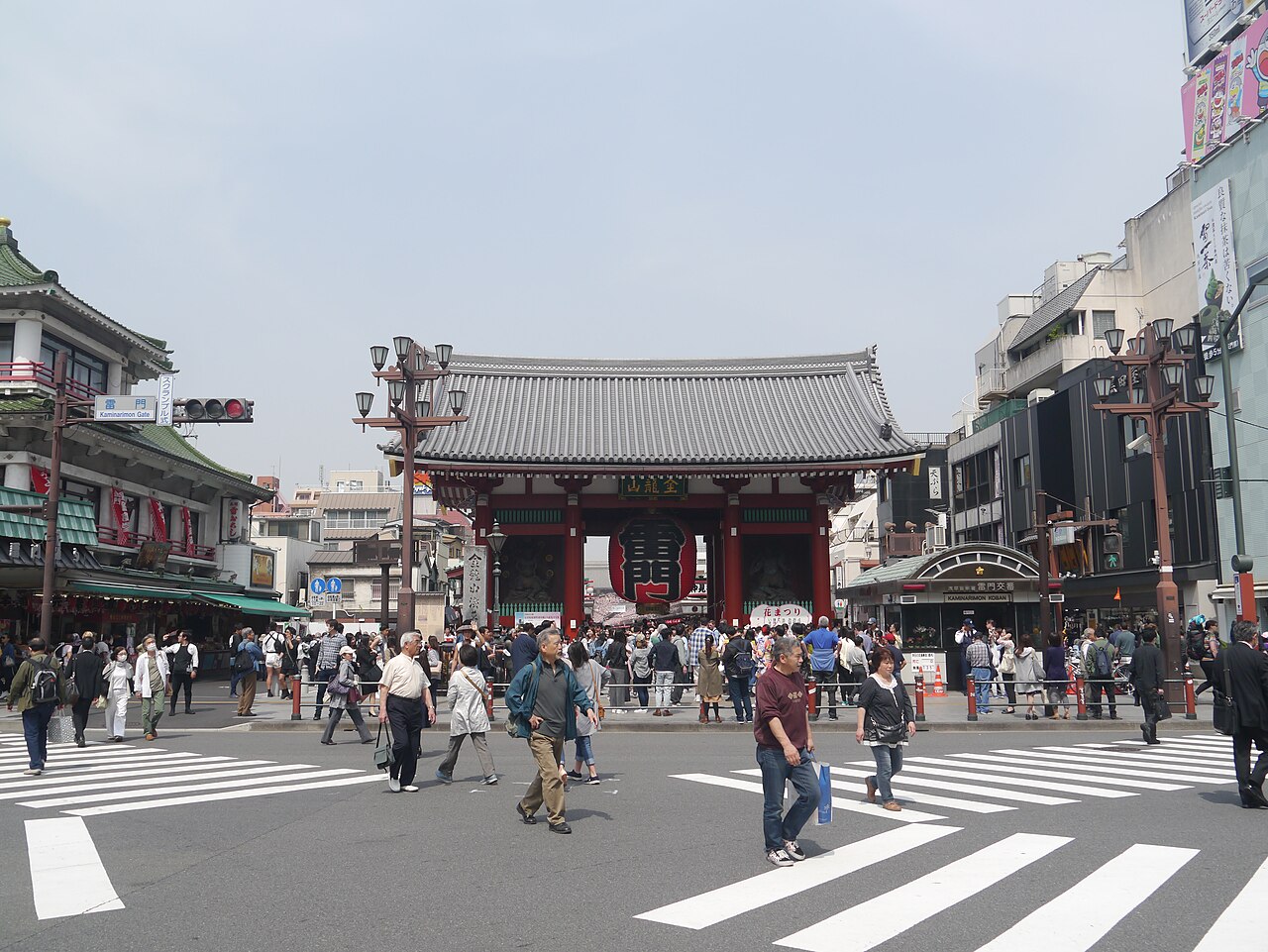
Tokyo is a city that loves to rebuild itself, but Asakusa never quite got the memo — and that is exactly why people love it. This is the city's old downtown, the shitamachi, where merchants, artisans, and temple pilgrims have mixed for centuries. Long before the skyscrapers, this was the entertainment heart of Edo, the old name for Tokyo: a place of theaters, festivals, street food, and shops selling small, clever, delicious things. Much of that spirit survives today, and it makes Asakusa one of the best places in Japan to shop for souvenirs that actually mean something.
Seeing Asakusa
Most visits begin at the Kaminarimon, the "Thunder Gate," with its enormous red paper lantern hanging beneath the roof. It is the entrance to Senso-ji, Tokyo's oldest temple, founded in the year 645. Passing under the lantern, you enter the Nakamise, a shopping street roughly 250 meters long that has served temple visitors for over three hundred years. Its rows of small shops sell snacks hot from the grill, folding fans, lucky charms, and sweets in beautiful boxes — many of them made by family businesses that have been here for generations.
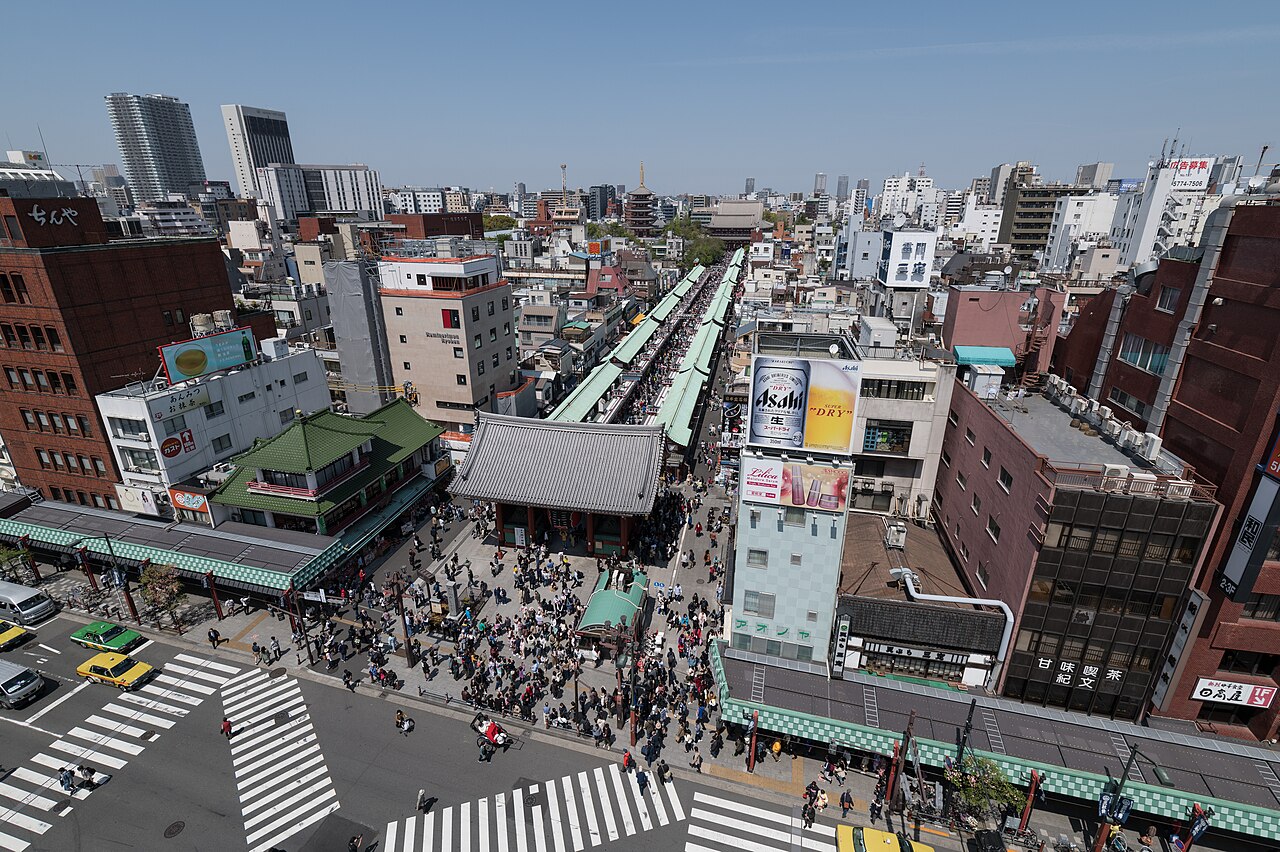
Take your time. Duck into the side streets, where knife makers, kimono shops, and tiny eateries carry on as they have for decades. Then, when you are ready to bring a piece of Asakusa home, here is what to look for.
Kaminari-Okoshi: The Thunder Cracker
If Asakusa had an official snack, this would be it. Kaminari-okoshi is a crunchy puffed-rice cracker, traditionally bound together with syrup and often mixed with peanuts. Its name is a small poem in itself: kaminari means thunder — a nod to the Thunder Gate — and okoshi comes from a verb meaning "to raise up," making it a lucky treat once given to people starting a new shop or venture, in hopes their fortunes would rise.
Vendors around the gate have sold okoshi for well over a century, and the classic version comes in simple, handsome packaging that has barely changed. It is light, keeps well, and travels beautifully in a suitcase. Look for the traditional plain style first; modern variations with matcha or brown sugar are fun additions once you know the original.
Kaminari-okoshi by Tokiwa-do — see it on Amazon Japan
Ningyo-Yaki: Little Cakes With Famous Faces
Ningyo-yaki are small, golden sponge cakes filled with sweet red bean paste, baked in cast-iron molds shaped like the landmarks and characters of Asakusa itself. Biting into one, you might meet the great lantern of the Thunder Gate, a five-story pagoda, a pigeon, or a cheerful festival dancer. The name means "doll cakes," after the ningyo dolls once sold in the theater district nearby.
The best way to enjoy them is warm, straight from the mold at a Nakamise stall, when the edges are crisp and the filling is soft. For gifts, boxed sets keep for days and stack the little shapes neatly together. When buying, check the shapes on offer — a set that includes the Kaminarimon lantern makes an instantly recognizable Asakusa souvenir.
Ningyo-yaki cakes — see them on Amazon Japan
Edo Kiriko: Cut Glass From the Artisan's City
Not every souvenir is edible. Edo kiriko is the traditional cut glass of Tokyo, developed in the nineteenth century by glass craftsmen who engraved delicate geometric patterns into colored glass — deep indigo, crimson, and violet layered over clear crystal. Hold a piece up to the light and the patterns scatter it like a kaleidoscope.
Kiriko grew up in the artisan quarters of the old city, and it remains a living craft: small workshops still cut each piece by hand. A single sake cup or a small tumbler is an elegant, lasting souvenir, and the traditional patterns — hemp leaf, tortoiseshell, interlocking circles — each carry a wish for health or prosperity. Look for pieces where the color layer is thin and the cutting is crisp; that clarity is the mark of skilled work.
Edo kiriko cut glass by Taburo Kobo — see it on Amazon Japan
Furin and Tenugui: Small Things, Everyday Beauty
Two of the most charming Asakusa souvenirs are also the lightest. The furin is a small wind chime of glass, iron, or ceramic, hung under the eaves in summer. A slip of paper beneath the bell catches the breeze, and its soft ring is said to make the heat feel cooler — Japanese summer in a single sound. Glass furin painted with goldfish or morning glories are a specialty of old Tokyo craft shops.
The tenugui is a thin cotton hand towel, dyed with patterns ranging from waves and cranes to playful seasonal designs. In the Edo period it was everyone's everyday essential — towel, handkerchief, wrapping cloth, and headband in one. Today it still does all of that, and it also makes a lovely wall hanging. Both furin and tenugui weigh almost nothing, cost little, and carry the everyday aesthetics of the old town better than almost anything else.
Edo furin wind chimes — see them on Amazon Japan
Tsukudani: The Taste of Old Tokyo, Preserved
Tsukudani is one of Tokyo's great edible traditions: small fish, shellfish, seaweed, or vegetables simmered slowly in soy sauce, mirin, and sugar until dark, glossy, and intensely savory. The technique was perfected on Tsukudajima, an island of fishermen near Asakusa, as a way to preserve the catch — and it became the flavor of the working city's dinner table.
A small jar or packet of tsukudani from a long-established shop is a connoisseur's souvenir: spoon it over hot rice and you have an instant Tokyo meal. Classic choices include kombu seaweed, tiny clams, and small river fish. Because it is preserved, it keeps far longer than most food gifts. Look for shops that still make it in small batches, and choose a mixed set if you want to taste the range.
Tsukudani — see it on Amazon Japan
Bringing Asakusa Home
Asakusa's souvenirs are special because they were never invented for tourists — they grew up with the temple crowds, the festivals, and the neighborhood itself. A box of thunder crackers, a piece of cut glass, a wind chime for your window: each one carries a little of the old town's warmth and craft. Whether you visit in person or order from home, these are gifts with a story worth telling.
Photos: Featured photo by Zairon (CC BY-SA 4.0) via Wikimedia Commons; Photo by DXR (CC BY-SA 4.0) via Wikimedia Commons.


This article contains affiliate links. If you buy through them, we may earn a commission at no extra cost to you.
コメントを残す