Welcome to Omiyage Japan. This blog exists for one simple reason: Japan's best souvenirs are not just things to buy — they are small, edible, beautiful pieces of the places they come from, and we want readers around the world to discover them.
What "Omiyage" Means
In Japan, when you travel, you bring something back. This custom is called omiyage: a gift from the place you visited, chosen for the people who stayed behind — family, friends, coworkers. Every region of Japan has its own omiyage, shaped by its history, its climate, and its pride. A box of sweets from Kyoto is never just a box of sweets; it carries tea fields, temple streets, and centuries of craft inside it.
Omiyage is how Japan shares its regions with each other. This blog is our way of sharing them with you.
Why This Blog Exists
If you live outside Japan, these regional specialties have traditionally been hard to reach. Many are sold only in local shops and station kiosks, and even when they appear online, the story behind them — why this snack, why this town, why this shape — rarely travels with them.
We started Omiyage Japan to close that gap. Our purpose is threefold:
To introduce Japan's regions through their souvenirs. Each article explores one area — its streets, its history, its food culture — through the gifts it is known for.
To tell the story behind each product. Who makes it, how long they have made it, and what it means to the people who live there. A souvenir with a story is a gift; without one, it is just merchandise.
To help you actually buy them. Every guide links to the products on Amazon Japan, so you can order authentic regional souvenirs from home, wherever you live.
How We Choose What to Feature
We look for products that are genuinely regional — made in the area, rooted in its traditions, and loved by locals, not invented for tourists. We favor long-established makers and classic items first, then add modern variations once you know the originals. If a product cannot be ordered from overseas, we say so and suggest the closest alternative.
A Note on Affiliate Links
This blog is reader-supported. Some links in our articles are affiliate links: if you buy through them, we may earn a small commission at no extra cost to you. This is what keeps Omiyage Japan running and lets us keep researching new regions. It never changes what we choose to feature — a product earns its place by being worth your suitcase (or your mailbox) first.
Where We Go Next
We began with five regions: Asakusa in Tokyo, Osaka, Kyoto, Hokkaido, and Okinawa. From here we will keep traveling — Kanazawa, Miyajima, Fukuoka, Nagoya, Kamakura, Nara, and beyond — along with roundup guides by budget, season, and theme.
Thank you for visiting. We hope you find a piece of Japan worth bringing home.
This article contains affiliate links. If you buy through them, we may earn a commission at no extra cost to you.
Okinawa feels different from the moment you land. The light is softer, the sea a shade of turquoise you thought only existed in travel posters, and the pace of life slows to something locals call nuchigusui — a feeling that nourishes the soul. This chain of islands in Japan's far south was once the Ryukyu Kingdom, an independent maritime nation that traded with China, Korea, and Southeast Asia for centuries. That history left Okinawa with a culture all its own: its own languages, music, crafts, and flavors that you won't find anywhere else in Japan.
That also makes Okinawa one of the most rewarding places in the country to shop for gifts. An Okinawan souvenir isn't just a snack or a trinket — it often carries a piece of that old kingdom's story. Here are five classics to look for, and what makes each one special.
Seeing Okinawa: Castles, Streets, and Island Time
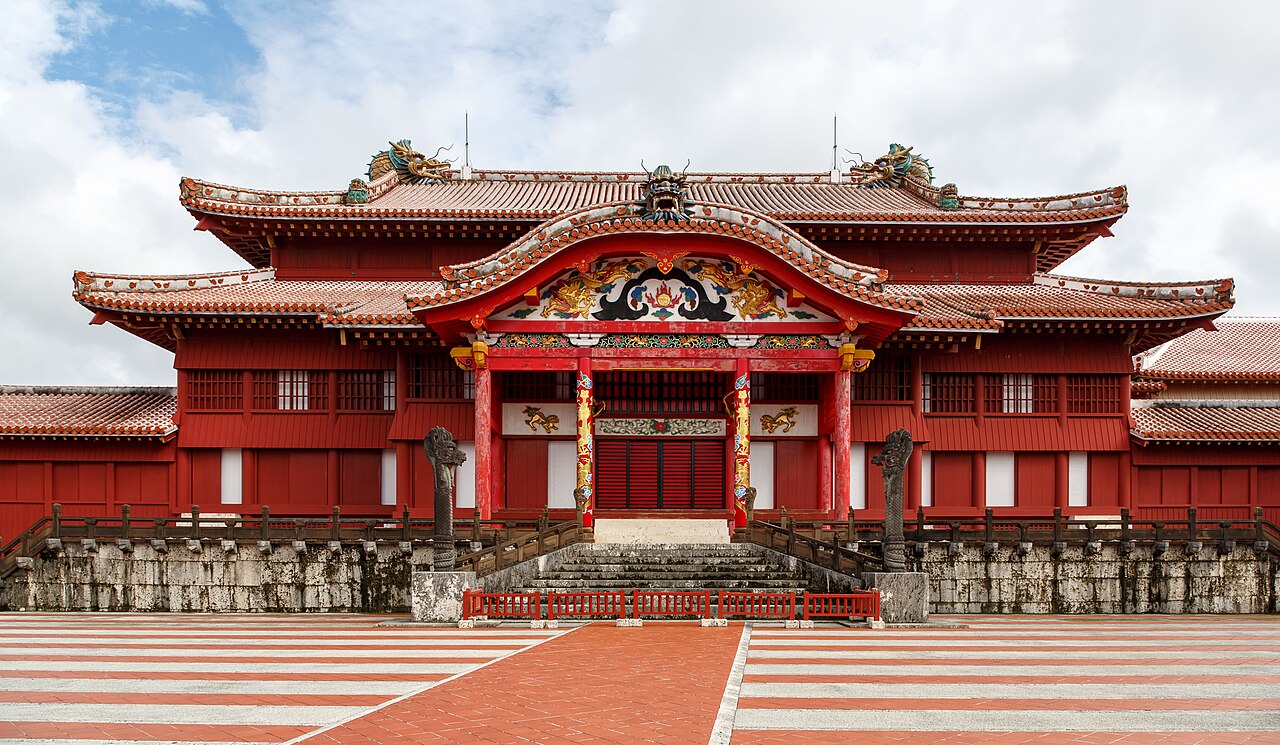
Most visitors start in Naha, the capital. Its symbol is Shuri Castle, the former palace of the Ryukyu kings, painted a brilliant vermilion unlike anything on the Japanese mainland. A fire in 2019 destroyed the main hall, but the site remains deeply moving, and reconstruction is steadily bringing the palace back to life — visiting is one way to support that effort.
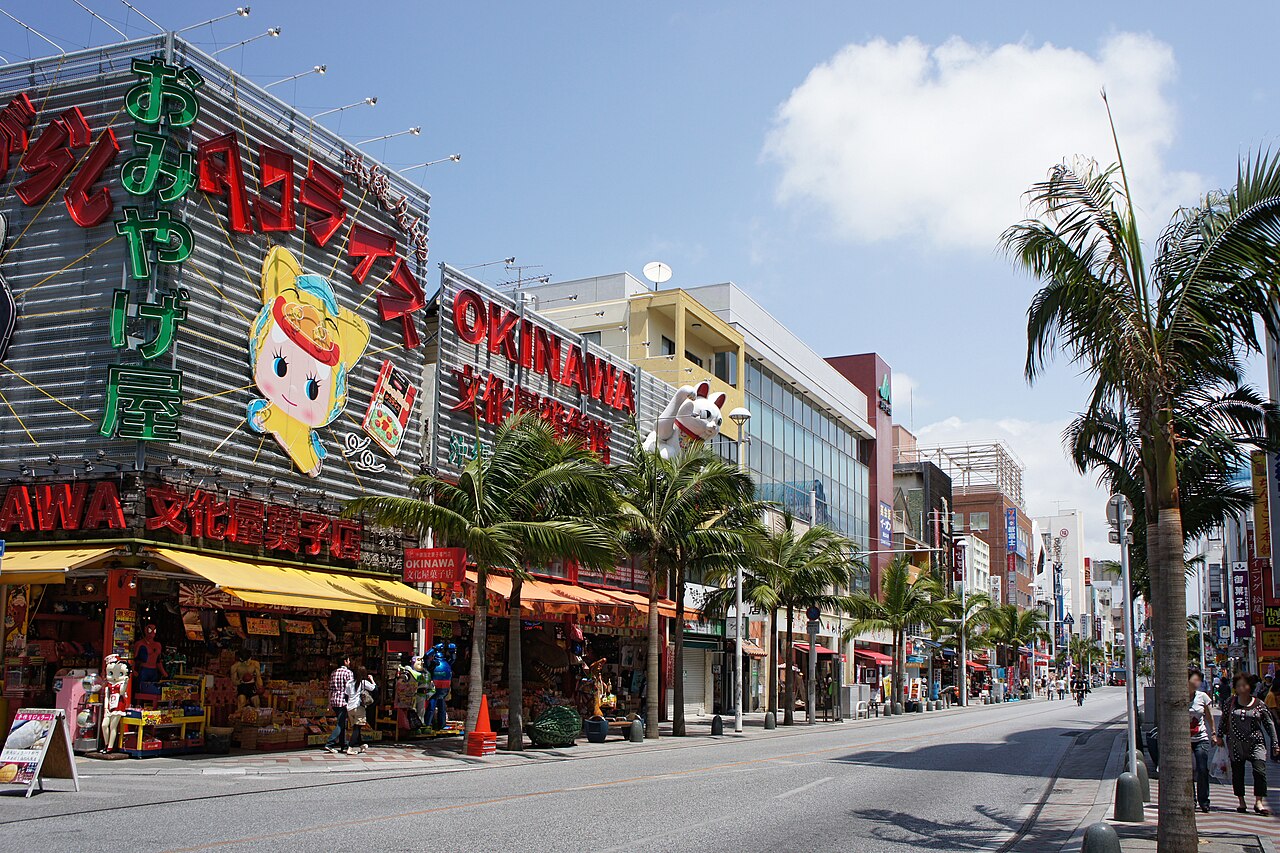
Kokusai-dori in Naha — the place to hunt for Okinawan souvenirs.
From Shuri, head down to Kokusai-dori, Naha's lively main street. Lined with souvenir shops, cafés, and performers, it's the easiest place to browse the full range of Okinawan gifts in one stroll. Just off the main drag, the pottery lane of Tsuboya Yachimun Street offers a quieter, older atmosphere, with kilns and workshops tucked between stone-paved lanes. Keep both in mind as you read on: many of the gifts below were born in places like these.
Chinsuko: The Royal Cookie of the Ryukyu Court
Chinsuko is Okinawa's most famous sweet — a small, crumbly shortbread-style cookie made from flour, sugar, and lard. Its name is said to mean something like "rare treasure," and for good reason: in the days of the Ryukyu Kingdom, chinsuko was a luxury served at the royal court and offered to honored guests, far beyond the reach of ordinary islanders.
Today everyone can enjoy it, and makers have expanded well beyond the classic plain version. You'll find chinsuko flavored with brown sugar, sea salt, chocolate, and even purple sweet potato. The texture is the charm — dry, delicate, and melting, somewhere between a biscuit and a piece of crumbly pastry. A box of individually wrapped chinsuko is light, keeps well, and is easy to share, which is why it remains the default "I went to Okinawa" gift across Japan.
If chinsuko is the classic, the beni-imo tart is the beloved modern icon. Beni-imo is Okinawa's vivid purple sweet potato, grown in the island's mineral-rich soil. Its natural color is so striking that the tart's filling looks almost jewel-like — a deep violet paste on a soft pastry base.
The tart became famous in the 1980s when local confectioners developed it as a new kind of Okinawan gift, and it has since become a staple of airport and souvenir shops. The flavor is gentle and earthy rather than very sweet, and the filling uses the potato's own color, with no need for anything artificial to achieve that purple. Look for tarts made with a high proportion of Okinawan-grown beni-imo, and note that the same potato appears in cakes, pies, and soft-serve ice cream all over the islands — the tart is simply the most giftable form.
Yachimun is the Okinawan word for pottery, and it has been fired on these islands for centuries. Ryukyu potters absorbed techniques from China and Southeast Asia through the kingdom's trade networks, then made them their own. The result is earthy, generous ware: warm clay tones, bold patterns of fish, waves, and hibiscus, and glazes in deep greens and browns that echo the island landscape.
A yachimun cup or mug makes a wonderful gift because no two pieces are exactly alike, and using one back home brings a little island warmth to an ordinary morning. Traditional designs are painted freehand, so small variations are a sign of the real thing, not a flaw. If you visit Tsuboya in Naha, you can watch potters at work; if you're shopping from home, look for pieces described as handmade in Okinawa and check whether they are food-safe and how they should be cared for.
Bingata is Okinawa's traditional stencil-dyed textile, once reserved for the royal family and nobility of the Ryukyu Kingdom. Artisans carve intricate stencils, then apply pigments in brilliant reds, yellows, and blues, building up patterns of flowers, birds, waves, and pine trees. The colors are pure Okinawa — bright as the sun and sea that surround the islands.
Full bingata kimono are treasures, but the craft has happily found its way into everyday items. A bingata tote bag or a set of coasters carries the same patterns and pigments in a form you can actually use, and every time the colors catch your eye you'll remember where they came from. When shopping, you'll see both hand-dyed pieces and printed designs inspired by bingata. Hand-dyed work costs more, but the depth of color is unmistakable; printed versions are a friendly way to enjoy the patterns at a lower price.
Shikuwasa is a small green citrus fruit native to Okinawa — think of it as the island's answer to the lime, but tarter, more aromatic, and packed with a distinctive sharpness. Islanders squeeze it over grilled fish, mix it into drinks, and credit it as one of the secrets behind Okinawa's famous longevity.
For gifts, shikuwasa shows up as bottled juice, salad dressings, jams, candies, and even salt blends. The 100% juice is the connoisseur's choice: a few drops transform sparkling water, cocktails, or a simple grilled dish. Because fresh shikuwasa rarely travels well, these bottled and processed versions are exactly how Okinawans themselves keep the flavor on hand year-round. If you like bright, sour flavors, this is the souvenir most likely to disappear from your kitchen first.
Okinawa's gifts work so well because they are not generic. A cookie once served to kings, a purple potato turned into a modern classic, pottery shaped by centuries of trade winds, cloth dyed for royalty, and a tiny lime that islanders swear by — each one tells you something true about these islands and the kingdom that shaped them. Whether you browse Kokusai-dori in person or shop from your sofa, choosing Okinawan crafts and foods is a small way to keep that island feeling, and to support the makers who keep these traditions alive.
Photos: Featured photo by CEphoto, Uwe Aranas (CC BY-SA 3.0) via Wikimedia Commons; Photo by 663highland (CC BY 2.5) via Wikimedia Commons.
This article contains affiliate links. If you buy through them, we may earn a commission at no extra cost to you.
Hokkaido is Japan's great northern island — a place of long, snowy winters, wide-open farmland, and some of the freshest seafood in the country. It feels different from the rest of Japan: the fields stretch to the horizon, the dairy cows outnumber the people in some towns, and the food culture is built around butter, milk, potatoes, corn, and whatever comes out of the cold northern seas.
Because Hokkaido is a long trip even for Japanese travelers, it has developed one of Japan's richest souvenir cultures. Bringing home a box of something delicious from Hokkaido is a small ritual — and the good news is that many of its most famous treats can now be ordered from overseas. Here are five classics that carry a little piece of Hokkaido with them.
Seeing Hokkaido
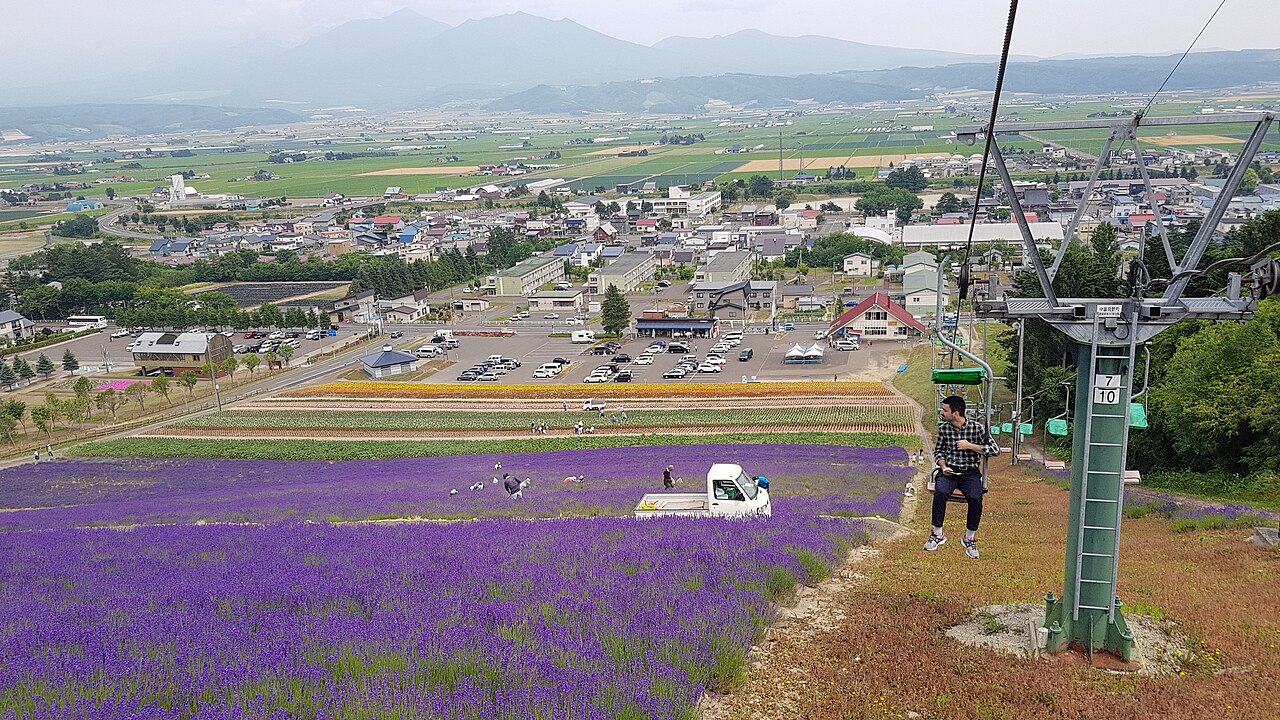
Most visitors arrive through Sapporo, the island's capital, famous for its snow festival each February, when enormous snow and ice sculptures fill Odori Park. Beyond the city, Hokkaido rewards slow travel: the lavender fields of Furano in summer, the drift ice off Abashiri in winter, hot-spring towns like Noboribetsu, and fishing ports where sea urchin and crab are landed in the morning and eaten by noon.
Summer lavender fields in Furano.
But even if your trip is short, there is one place you should not rush: New Chitose Airport. Japanese travelers treat its souvenir floors as a destination in themselves — rows of beautifully boxed sweets and snacks from every corner of the island, all in one place. It is the perfect introduction to what Hokkaido tastes like, and the five souvenirs below are its undisputed stars.
Shiroi Koibito
Shiroi Koibito — the name means "white lovers" — is Hokkaido's most famous sweet: two thin, crisp langue de chat butter cookies sandwiching a delicate layer of white chocolate. The cookies are baked until just golden, and the combination of buttery crunch and smooth chocolate is simple, elegant, and unmistakably Hokkaido, where dairy farming is a way of life.
The cookies were created in Sapporo in the 1970s by the confectioner Ishiya, and the name is said to come from a remark made on a snowy day — a fitting origin for a sweet wrapped in white and blue, the colors of Hokkaido's winter. There is even a theme park in Sapporo, Shiroi Koibito Park, built around the cookie.
What to look for: the classic white-chocolate version in the signature blue box is the standard gift. A milk-chocolate version exists too, but the original is the one Hokkaido is proud of.
If Shiroi Koibito is Hokkaido's most famous cookie, Royce' Nama chocolate may be its most luxurious treat. "Nama" means "fresh," and this is fresh chocolate in the truest sense: silky ganache made with Hokkaido cream, cut into small squares and dusted with cocoa powder. It melts the moment it touches your tongue.
Royce' was founded in Sapporo in 1983 and built its reputation on the quality of Hokkaido milk and cream — ingredients the island's cool climate and rich pastures produce exceptionally well. Nama chocolate must be kept refrigerated, which is why it was once almost impossible to take home. Today it is sold with cooling packs and shipped carefully, so overseas fans can finally order it.
What to look for: the "Au Lait" flavor, made with milk chocolate and fresh cream, is the bestseller and the best place to start. Keep it chilled and eat it within a few weeks — it is a fresh product, not a long-life one.
Hokkaido grows some of Japan's finest potatoes, and Jaga Pokkuru is what happens when those potatoes are treated with real care. Whole potatoes are cut with their skins on and fried into crunchy sticks using a special low-temperature method, then seasoned with roasted salt from the Sea of Okhotsk. The result tastes remarkably like a perfect French fry, only lighter and more delicate.
Jaga Pokkuru is made by Calbee's Hokkaido-focused brand, Potato Farm, and for years it was famously hard to get — boxes sold out at New Chitose Airport by midday, and travelers guarded them jealously. That scarcity made it a legend, and it remains one of the airport's most sought-after snacks.
What to look for: the original salt flavor is the classic. Boxes come in several sizes, and the larger ones are made for sharing — though few people manage to share for long.
Rokkatei is one of Hokkaido's most beloved confectioners, founded in Obihiro in 1933, in the heart of the Tokachi plain — dairy country. Its signature sweet, the Marusei Butter Sandwich, is a small masterpiece: two soft butter biscuits filled with a cream of white chocolate, Hokkaido butter, and rum-soaked raisins.
The name "Marusei" comes from an old brand of butter produced in Tokachi in the early days of Hokkaido's dairy industry, and the retro packaging — a reproduction of that vintage butter label — is part of the charm. Every bite is rich, gently sweet, and redolent of butter, which is exactly the point: this is a souvenir that tastes like Hokkaido's farmland.
What to look for: the butter sandwiches are the essential purchase, but if you see other Rokkatei sweets — their strawberry chocolates are another favorite — they are well worth adding to your order.
Not every Hokkaido souvenir is edible. The carved wooden bear — kibori no kuma — is the island's classic keepsake: a bear, usually clutching a salmon in its mouth or paws, carved from a single block of wood with bold, expressive cuts.
Wood carving in Hokkaido grew from the craft traditions of the Ainu, the island's Indigenous people, for whom the bear is a sacred being — a god visiting the human world. In the early twentieth century, farmers in the town of Yakumo began carving bears during the long winter months, and the craft spread across the island. By the postwar years, no trip to Hokkaido was complete without bringing one home.
What to look for: bears vary enormously, from small, affordable figures a few centimeters tall to large one-of-a-kind works by named carvers. Look for clean, confident carving and a bear with real character — the best ones seem ready to lumber off the shelf.
Hokkaido's souvenirs tell the island's story in miniature: butter and cream from its pastures, potatoes from its fields, chocolate perfected in its capital, and a wooden bear that carries centuries of northern craft. Whether you have stood in the snow at the Sapporo Snow Festival or are still dreaming of your first trip, ordering a few of these home is a small way to taste the far north — and to understand why Japanese travelers never leave the island empty-handed.
Photos: Featured photo by Haha169 (CC BY-SA 4.0) via Wikimedia Commons; Photo by Blondinrikard Fröberg from Göteborg, Sweden (CC BY 2.0) via Wikimedia Commons.
This article contains affiliate links. If you buy through them, we may earn a commission at no extra cost to you.
Kyoto was Japan's capital for more than a thousand years, and it still feels like the country's memory. Emperors, tea masters, monks, and master craftsmen all left their mark here, and the city has a habit of turning everyday things — a cup of tea, a sweet, a folding fan — into small works of art. That is exactly what makes Kyoto such a rewarding place to shop. The best Kyoto souvenirs are not generic gifts with the city's name printed on them. They are things Kyotoites have been making, eating, and giving for centuries, each carrying a little piece of the city's story. Here are five to look for.
Seeing Kyoto
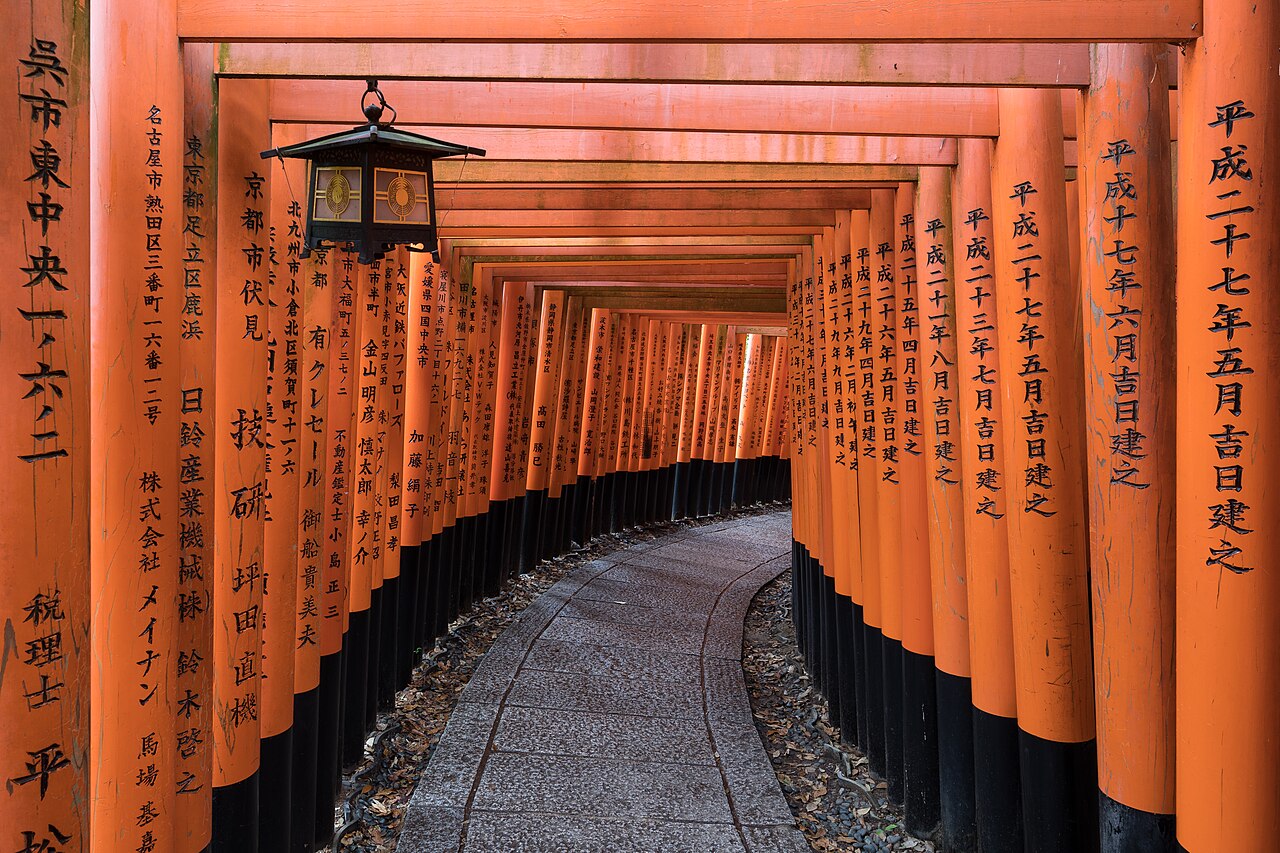
Most first-time visitors spend their days in the east of the city, and for good reason. Start in Gion, Kyoto's famous geisha district, where wooden machiya townhouses line Hanamikoji Street and you may glimpse a maiko hurrying to an evening appointment. From there, walk up the preserved lanes of Sannenzaka and Ninenzaka to Kiyomizu-dera Temple, whose great wooden stage looks out over the city. Along the way you will pass teahouses, sweet shops, pottery studios, and fan makers — many of the souvenirs below come from these very streets. Give yourself time to wander: in Kyoto, shopping is not separate from sightseeing. It is part of it.
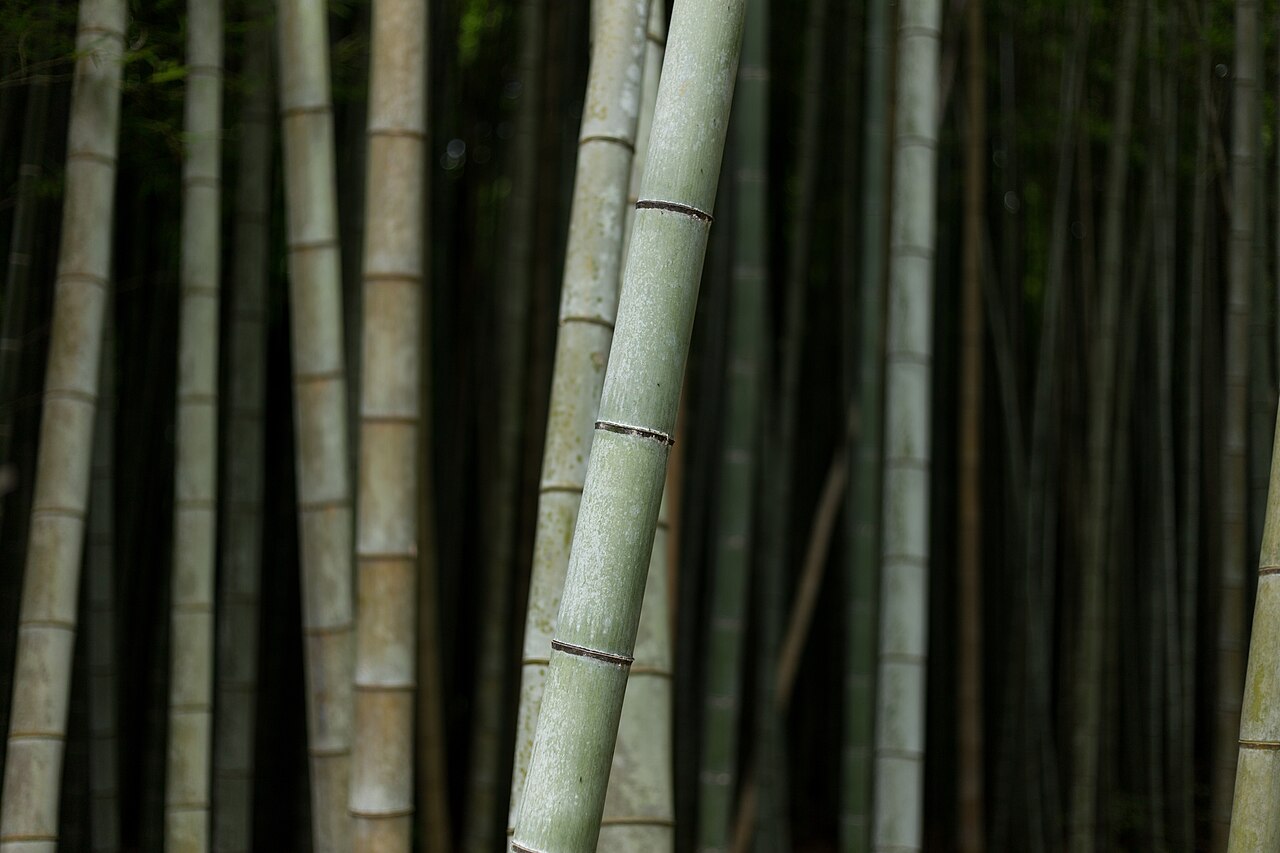
The bamboo grove of Arashiyama.
1. Uji Matcha and Matcha Sweets
Just south of Kyoto lies Uji, a small city synonymous with Japan's finest green tea. Tea has been grown there since the 13th century, and the shaded fields along the Uji River produce leaves prized for their deep color and gentle umami. Matcha — stone-ground powdered green tea — became central to Kyoto culture through the tea ceremony, which was refined here by masters such as Sen no Rikyu. In Kyoto, matcha is not just a drink. It flavors soft-serve ice cream, parfaits, cakes, chocolates, and even noodles.
When buying, look for ceremonial-grade matcha from Uji if you plan to whisk it at home, and matcha sweets — cookies, chocolates, and langue de chat — for gifts that travel well. The tins and boxes are often beautiful in themselves.
If Kyoto had an official sweet, it would be yatsuhashi. The original is a baked cinnamon-flavored wafer, crisp and fragrant, said to be shaped like a koto, the traditional Japanese harp. Its softer cousin, nama yatsuhashi ("raw" yatsuhashi), is the one visitors fall for: a chewy rice-flour dough, delicately scented with cinnamon, folded into a triangle around a filling of sweet red bean paste. Modern shops add matcha, chocolate, strawberry, and seasonal flavors, but the classic cinnamon-and-bean version remains the one to try first.
Yatsuhashi has been sold near Kyoto's temples for generations, often by vendors offering samples with a cup of tea. Buy a fresh box near the end of your trip — nama yatsuhashi is best eaten within a week or two — and keep a baked yatsuhashi box in your suitcase as a longer-lasting backup gift.
The lanes climbing toward Kiyomizu-dera are lined with pottery shops for a reason: this is the home of Kiyomizu-yaki, Kyoto's signature ceramics. Potters have worked in this area for centuries, supplying tea bowls and utensils to the temples and tea masters of the capital. Unlike the rustic, earthy pottery of some other regions, Kiyomizu-yaki is known for its refinement — smooth glazes in soft celadon, white, and floral patterns painted with a fine brush. A single teacup or small bowl carries the elegance of the tea ceremony in miniature.
Choose a piece you will actually use: a yunomi teacup for your morning tea, or a small matcha bowl if you bought matcha to go with it. Shops will wrap fragile pieces carefully for travel, and a cup used daily at home is a souvenir that keeps working long after the trip ends.
In Kyoto's northwest, the weavers of the Nishijin district have produced luxurious silk textiles for over a thousand years, originally for the imperial court and the obi sashes of fine kimono. Nishijin-ori is famous for its intricate woven patterns — cranes, pine branches, flowing water — created on complex looms where the design is woven into the fabric itself rather than printed on top.
Few travelers can bring home a full obi, but Nishijin weaving also appears in small, giftable forms: zippered pouches, card cases, and gamaguchi purses with their distinctive metal clasps. They are light, flat, and easy to pack, and the fabric's sheen makes even a small pouch feel special. Pick a pattern with a motif you like — in Kyoto, motifs are never just decoration; each carries a wish for luck, longevity, or happiness.
The folding fan was invented in Japan, and Kyoto became its capital of craftsmanship. Kyo-sensu are made by dozens of specialized artisans, each handling one stage — splitting the bamboo ribs, making the washi paper, painting the design, assembling the whole. Fans were never only for cooling down in Kyoto's humid summers. They were writing surfaces for poems, props in dance and theater, and formal accessories whose painted scenes — cherry blossoms, autumn maples, the five-story pagoda — told a story of their own.
A Kyoto fan makes a graceful gift: it weighs almost nothing, folds flat into a suitcase, and opens into a piece of art. Look for hand-painted designs on washi paper with bamboo ribs, and consider a fan stand if you plan to display it at home rather than use it.
Kyoto rewards travelers who slow down, and its souvenirs do too. A tin of Uji matcha, a box of cinnamon-scented yatsuhashi, a glazed cup from the Kiyomizu lanes — none of these are flashy, but each one holds a story about how this city has lived for a thousand years. Choose the pieces that connect to the Kyoto you experienced: the temple you climbed to, the tea you drank, the street you wandered. Those are the souvenirs you will still be glad you bought years from now.
Photos: Featured photo by Basile Morin (CC BY-SA 4.0) via Wikimedia Commons; Photo by Erol Ahmed erol (CC0) via Wikimedia Commons.
This article contains affiliate links. If you buy through them, we may earn a commission at no extra cost to you.
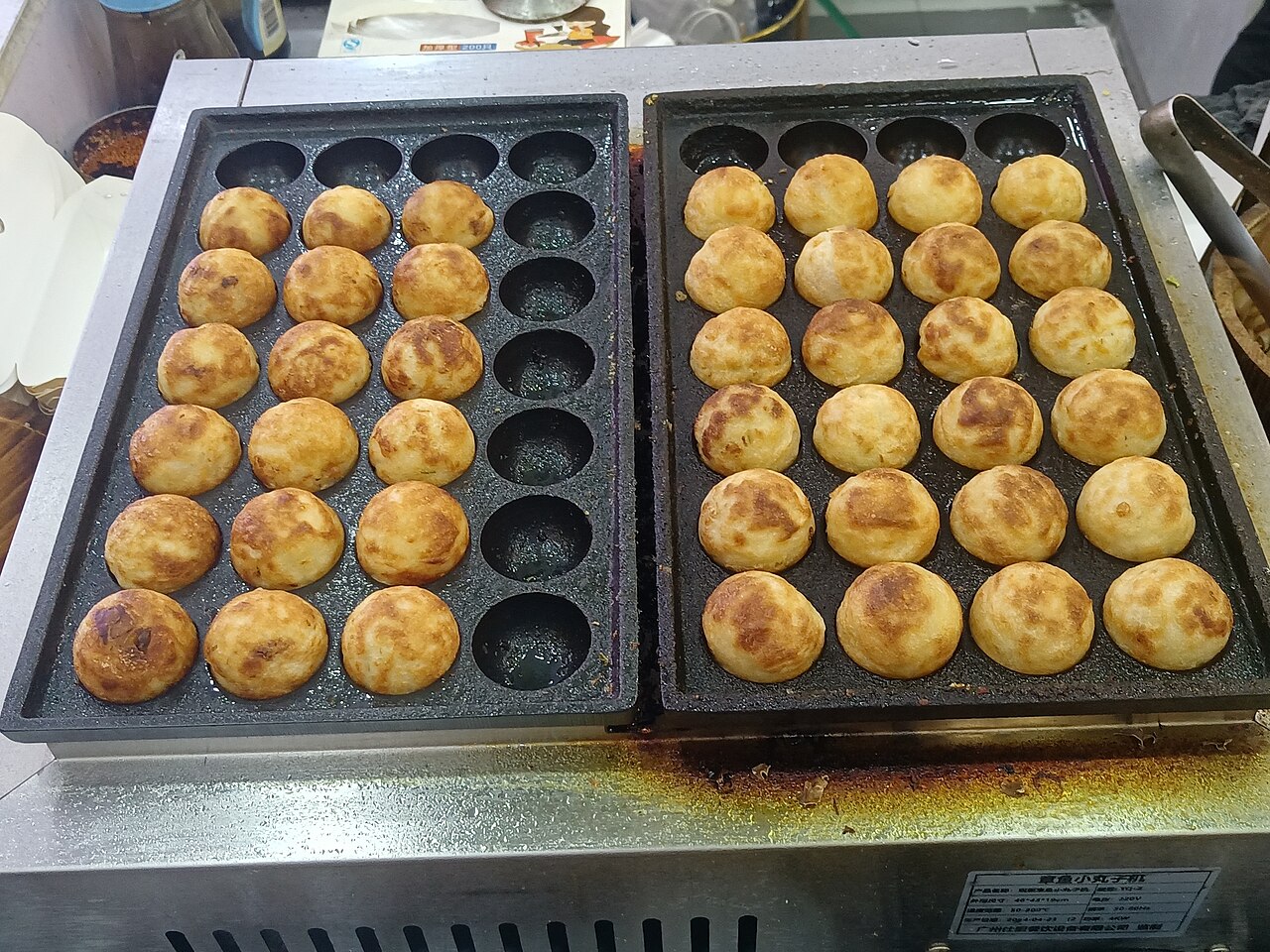
Ask someone to picture Osaka and they will probably mention takoyaki — those golden, octopus-filled balls sold sizzling from street stalls. Takoyaki is wonderful, but it is only the beginning. Osaka is Japan's merchant city, a place built by traders, comedians and cooks, and its souvenirs carry that personality: funny, generous, a little over the top, and always designed to make someone smile. If you want a gift that actually feels like Osaka, here are five to look for.
Seeing Osaka: The City of Kuidaore
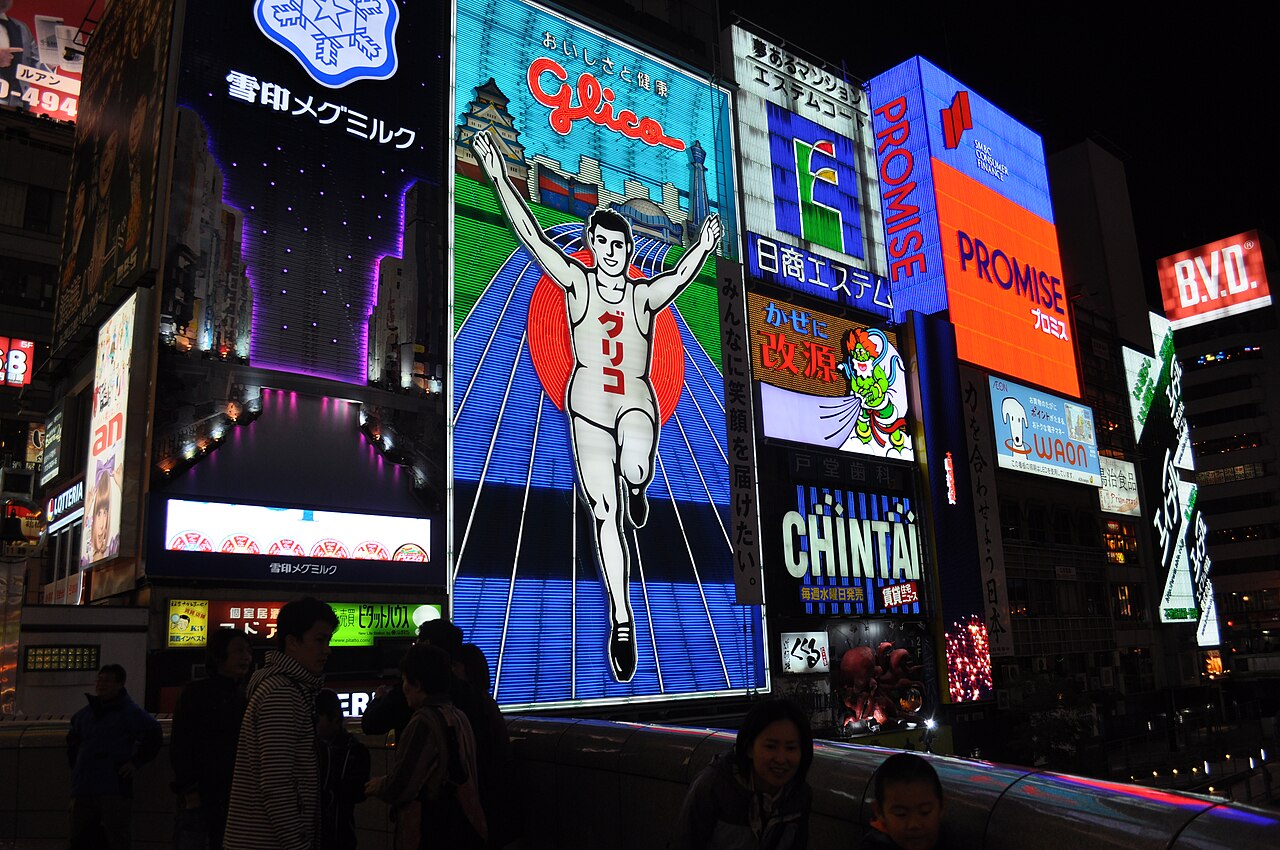
Osaka's unofficial motto is kuidaore — "eat until you drop." Nowhere expresses it better than Dotonbori, the canal-side street in Namba lit by giant neon signs, including the famous running Glico man. Restaurants compete with enormous moving crabs, dragons and octopus statues, and the whole street feels like a festival that never quite ends.
Takoyaki — the street food Osaka is proudest of.
But Osaka's warmth is not just spectacle. This was historically a city of merchants rather than samurai, and that shows in the culture: shopkeepers greet you loudly, strangers strike up conversations, and humour is a local art form — Osaka is the home of manzai, Japan's fast-talking stand-up comedy. The souvenirs below come from that world. Each one has a story, and each one will make sense the moment you hand it to someone.
1. Takoyaki Senbei: The Flavour That Travels
Fresh takoyaki does not survive a flight home, so Osaka solved the problem the practical way: it turned the flavour into a cracker. Takoyaki senbei are crisp rice crackers seasoned to taste like the real thing — savoury sauce, bonito, a hint of the grill.
They are light, flat and easy to pack, which is exactly why they became a standard Osaka gift. Buy a box for the office and you are handing out a tiny, crunchy summary of Dotonbori street food. Look for boxes decorated with the city's landmarks, and check whether the flavour leans sweet-sauce or spicy — locals have opinions.
In Osaka, cheesecake is not a slice — it is a performance. Rikuro's famous soufflé cheesecake comes out of the oven stamped with the smiling face of "Rikuro Ojisan," the baker mascot, and it wobbles like jelly when it moves. Watching a fresh one being stamped in the shop is half the fun.
The cake itself is famously hard to take overseas, which is why the merchandise matters: Rikuro-themed goods, from packaging-inspired items to mascot souvenirs, let you bring the story home even when the cake cannot travel. If you are in Osaka, queue for a fresh cake at least once — then pick up the goods for everyone who could not be there.
3. 551 Horai Butaman Goods: The Steam Everyone Knows
If Osaka has a smell, it might be the savoury steam of a 551 Horai pork bun. The butaman — a soft, white bun filled with juicy seasoned pork — is so beloved that the shops, recognisable by their red-and-white colours, are a fixture of stations across the Kansai region. Travellers buy boxes to carry on the train home, and everyone nearby knows exactly what is in the bag.
The buns themselves are a fresh food, but 551 Horai's popularity has produced themed goods that capture the joke: items styled on the bun, the box and the branding that every Kansai local instantly recognises. For anyone who has lived in or visited Osaka, it is an immediate nostalgia hit.
Here is where Osaka's humour takes over completely. Hokkaido's most famous souvenir is a elegant white-chocolate cookie called Shiroi Koibito — "White Lover." Osaka's answer? Omoshiroi Koibito — "Funny Lover." It is a deliberate, affectionate parody, sold openly as a gag gift, and it became so popular that it is now a classic Osaka souvenir in its own right.
That is Osaka in a box: take something refined, make the funny version, and sell it with a straight face. The cookies themselves are perfectly good — but the real gift is the reaction when someone reads the name. If you are buying for someone who knows Japan well, this is the one that gets the laugh.
Japan loves regional limited editions, and Osaka does them with characteristic enthusiasm. Major snack brands release Osaka-only flavours and packaging — think banana-and-caramel twists on famous chocolate snacks, or sweets dressed up with the Tsutenkaku tower and Dotonbori's neon signs on the box.
These make ideal small gifts: affordable, easy to divide among friends, and genuinely unavailable elsewhere. The trick is to check the box for the words "Osaka limited" (大阪限定) and a landmark design. Stock up at station kiosks and souvenir floors in department stores, where the limited editions are gathered in one place.
Osaka does not do souvenirs quietly. Its gifts are crunchy, jiggly, steaming, punny and proudly local — food first, but always with a story attached. Choose the takoyaki crackers for the street-food lover, the Rikuro goods for the dessert fan, the 551 Horai items for the Kansai nostalgist, the joke cookies for the friend who gets it, and a box of limited-edition sweets for everyone else. That is kuidaore, packed in a suitcase.
Photos: Featured photo by Schellack (CC BY-SA 3.0) via Wikimedia Commons; Photo by Fumikas Sagisavas (CC0) via Wikimedia Commons.
This article contains affiliate links. If you buy through them, we may earn a commission at no extra cost to you.
Tokyo is a city that loves to rebuild itself, but Asakusa never quite got the memo — and that is exactly why people love it. This is the city's old downtown, the shitamachi, where merchants, artisans, and temple pilgrims have mixed for centuries. Long before the skyscrapers, this was the entertainment heart of Edo, the old name for Tokyo: a place of theaters, festivals, street food, and shops selling small, clever, delicious things. Much of that spirit survives today, and it makes Asakusa one of the best places in Japan to shop for souvenirs that actually mean something.
Seeing Asakusa
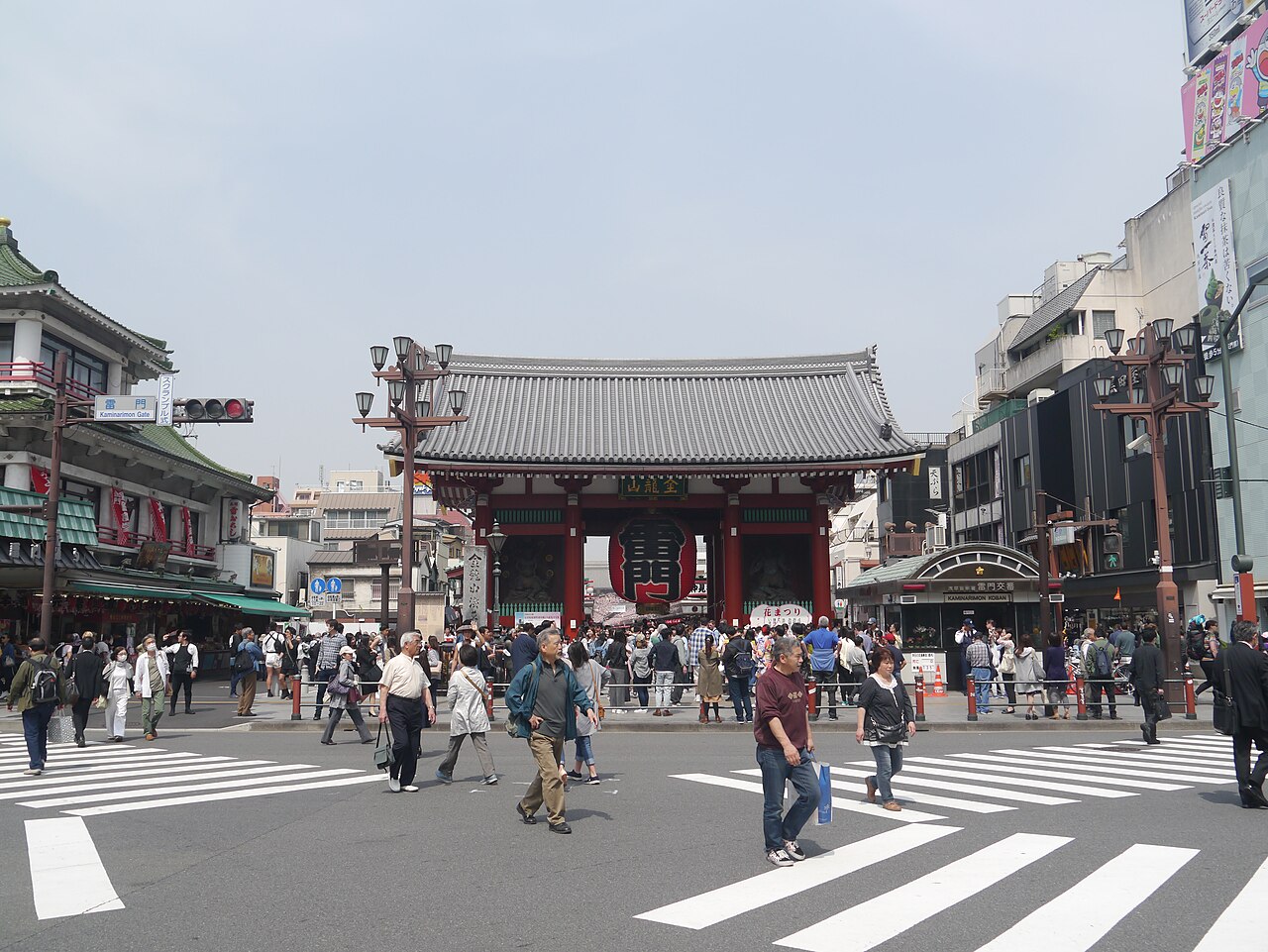
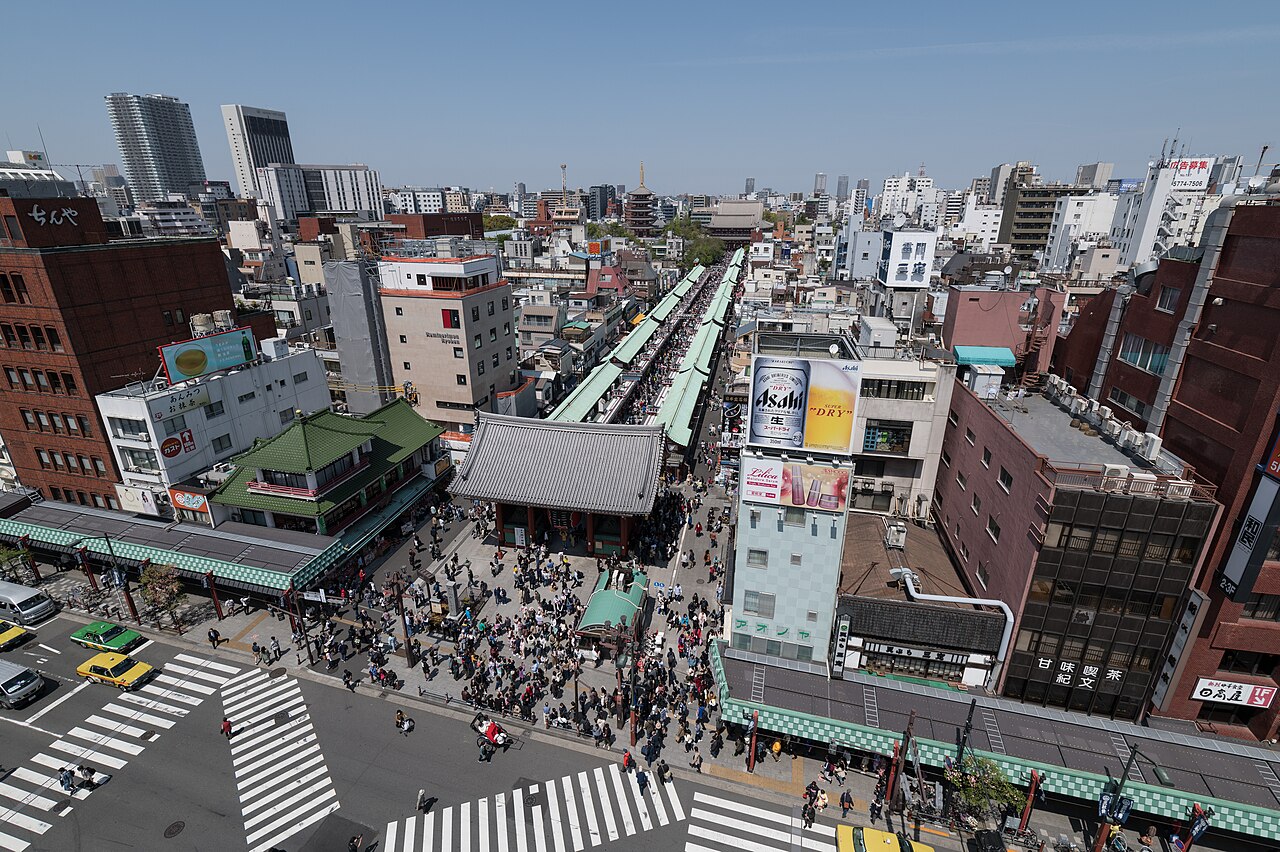
Most visits begin at the Kaminarimon, the "Thunder Gate," with its enormous red paper lantern hanging beneath the roof. It is the entrance to Senso-ji, Tokyo's oldest temple, founded in the year 645. Passing under the lantern, you enter the Nakamise, a shopping street roughly 250 meters long that has served temple visitors for over three hundred years. Its rows of small shops sell snacks hot from the grill, folding fans, lucky charms, and sweets in beautiful boxes — many of them made by family businesses that have been here for generations.
The Nakamise shopping street, serving Senso-ji visitors for over 300 years.
Take your time. Duck into the side streets, where knife makers, kimono shops, and tiny eateries carry on as they have for decades. Then, when you are ready to bring a piece of Asakusa home, here is what to look for.
Kaminari-Okoshi: The Thunder Cracker
If Asakusa had an official snack, this would be it. Kaminari-okoshi is a crunchy puffed-rice cracker, traditionally bound together with syrup and often mixed with peanuts. Its name is a small poem in itself: kaminari means thunder — a nod to the Thunder Gate — and okoshi comes from a verb meaning "to raise up," making it a lucky treat once given to people starting a new shop or venture, in hopes their fortunes would rise.
Vendors around the gate have sold okoshi for well over a century, and the classic version comes in simple, handsome packaging that has barely changed. It is light, keeps well, and travels beautifully in a suitcase. Look for the traditional plain style first; modern variations with matcha or brown sugar are fun additions once you know the original.
Ningyo-yaki are small, golden sponge cakes filled with sweet red bean paste, baked in cast-iron molds shaped like the landmarks and characters of Asakusa itself. Biting into one, you might meet the great lantern of the Thunder Gate, a five-story pagoda, a pigeon, or a cheerful festival dancer. The name means "doll cakes," after the ningyo dolls once sold in the theater district nearby.
The best way to enjoy them is warm, straight from the mold at a Nakamise stall, when the edges are crisp and the filling is soft. For gifts, boxed sets keep for days and stack the little shapes neatly together. When buying, check the shapes on offer — a set that includes the Kaminarimon lantern makes an instantly recognizable Asakusa souvenir.
Not every souvenir is edible. Edo kiriko is the traditional cut glass of Tokyo, developed in the nineteenth century by glass craftsmen who engraved delicate geometric patterns into colored glass — deep indigo, crimson, and violet layered over clear crystal. Hold a piece up to the light and the patterns scatter it like a kaleidoscope.
Kiriko grew up in the artisan quarters of the old city, and it remains a living craft: small workshops still cut each piece by hand. A single sake cup or a small tumbler is an elegant, lasting souvenir, and the traditional patterns — hemp leaf, tortoiseshell, interlocking circles — each carry a wish for health or prosperity. Look for pieces where the color layer is thin and the cutting is crisp; that clarity is the mark of skilled work.
Two of the most charming Asakusa souvenirs are also the lightest. The furin is a small wind chime of glass, iron, or ceramic, hung under the eaves in summer. A slip of paper beneath the bell catches the breeze, and its soft ring is said to make the heat feel cooler — Japanese summer in a single sound. Glass furin painted with goldfish or morning glories are a specialty of old Tokyo craft shops.
The tenugui is a thin cotton hand towel, dyed with patterns ranging from waves and cranes to playful seasonal designs. In the Edo period it was everyone's everyday essential — towel, handkerchief, wrapping cloth, and headband in one. Today it still does all of that, and it also makes a lovely wall hanging. Both furin and tenugui weigh almost nothing, cost little, and carry the everyday aesthetics of the old town better than almost anything else.
Tsukudani is one of Tokyo's great edible traditions: small fish, shellfish, seaweed, or vegetables simmered slowly in soy sauce, mirin, and sugar until dark, glossy, and intensely savory. The technique was perfected on Tsukudajima, an island of fishermen near Asakusa, as a way to preserve the catch — and it became the flavor of the working city's dinner table.
A small jar or packet of tsukudani from a long-established shop is a connoisseur's souvenir: spoon it over hot rice and you have an instant Tokyo meal. Classic choices include kombu seaweed, tiny clams, and small river fish. Because it is preserved, it keeps far longer than most food gifts. Look for shops that still make it in small batches, and choose a mixed set if you want to taste the range.
Asakusa's souvenirs are special because they were never invented for tourists — they grew up with the temple crowds, the festivals, and the neighborhood itself. A box of thunder crackers, a piece of cut glass, a wind chime for your window: each one carries a little of the old town's warmth and craft. Whether you visit in person or order from home, these are gifts with a story worth telling.
Photos: Featured photo by Zairon (CC BY-SA 4.0) via Wikimedia Commons; Photo by DXR (CC BY-SA 4.0) via Wikimedia Commons.
This article contains affiliate links. If you buy through them, we may earn a commission at no extra cost to you.