Okinawa feels different from the moment you land. The light is softer, the sea a shade of turquoise you thought only existed in travel posters, and the pace of life slows to something locals call nuchigusui — a feeling that nourishes the soul. This chain of islands in Japan's far south was once the Ryukyu Kingdom, an independent maritime nation that traded with China, Korea, and Southeast Asia for centuries. That history left Okinawa with a culture all its own: its own languages, music, crafts, and flavors that you won't find anywhere else in Japan.
That also makes Okinawa one of the most rewarding places in the country to shop for gifts. An Okinawan souvenir isn't just a snack or a trinket — it often carries a piece of that old kingdom's story. Here are five classics to look for, and what makes each one special.
Seeing Okinawa: Castles, Streets, and Island Time
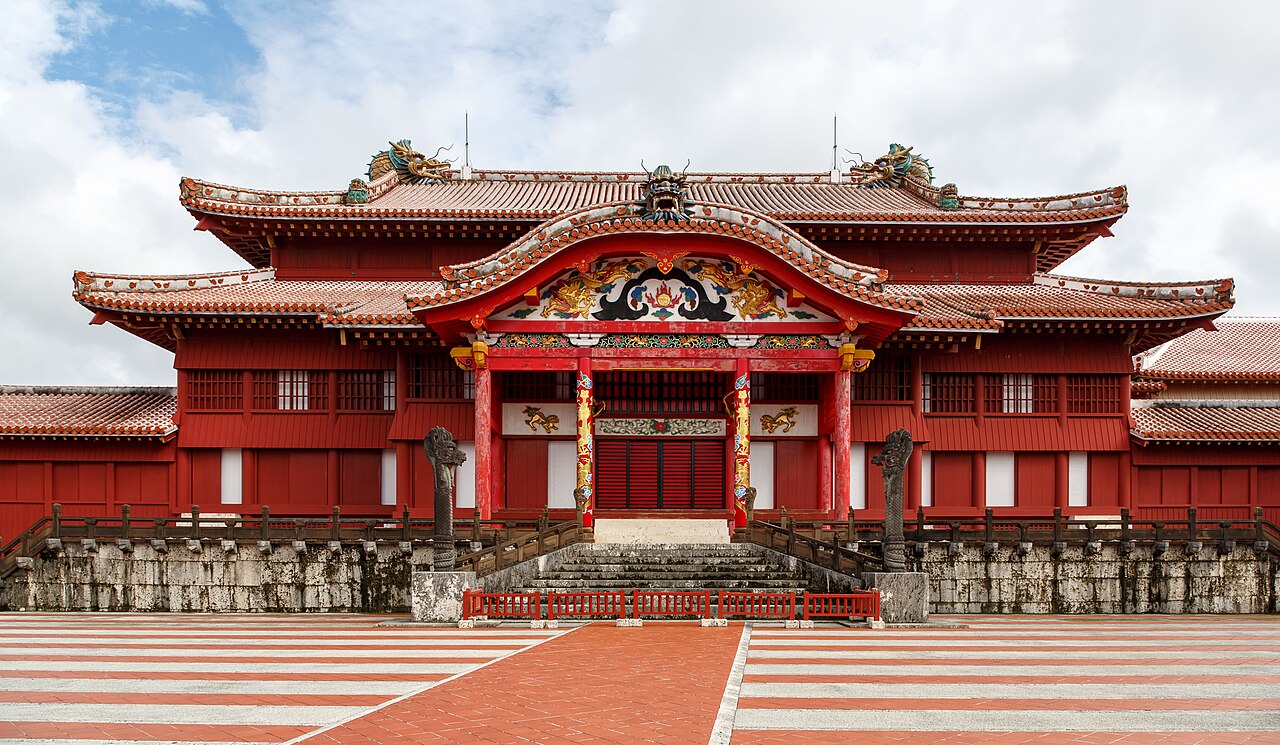
Most visitors start in Naha, the capital. Its symbol is Shuri Castle, the former palace of the Ryukyu kings, painted a brilliant vermilion unlike anything on the Japanese mainland. A fire in 2019 destroyed the main hall, but the site remains deeply moving, and reconstruction is steadily bringing the palace back to life — visiting is one way to support that effort.
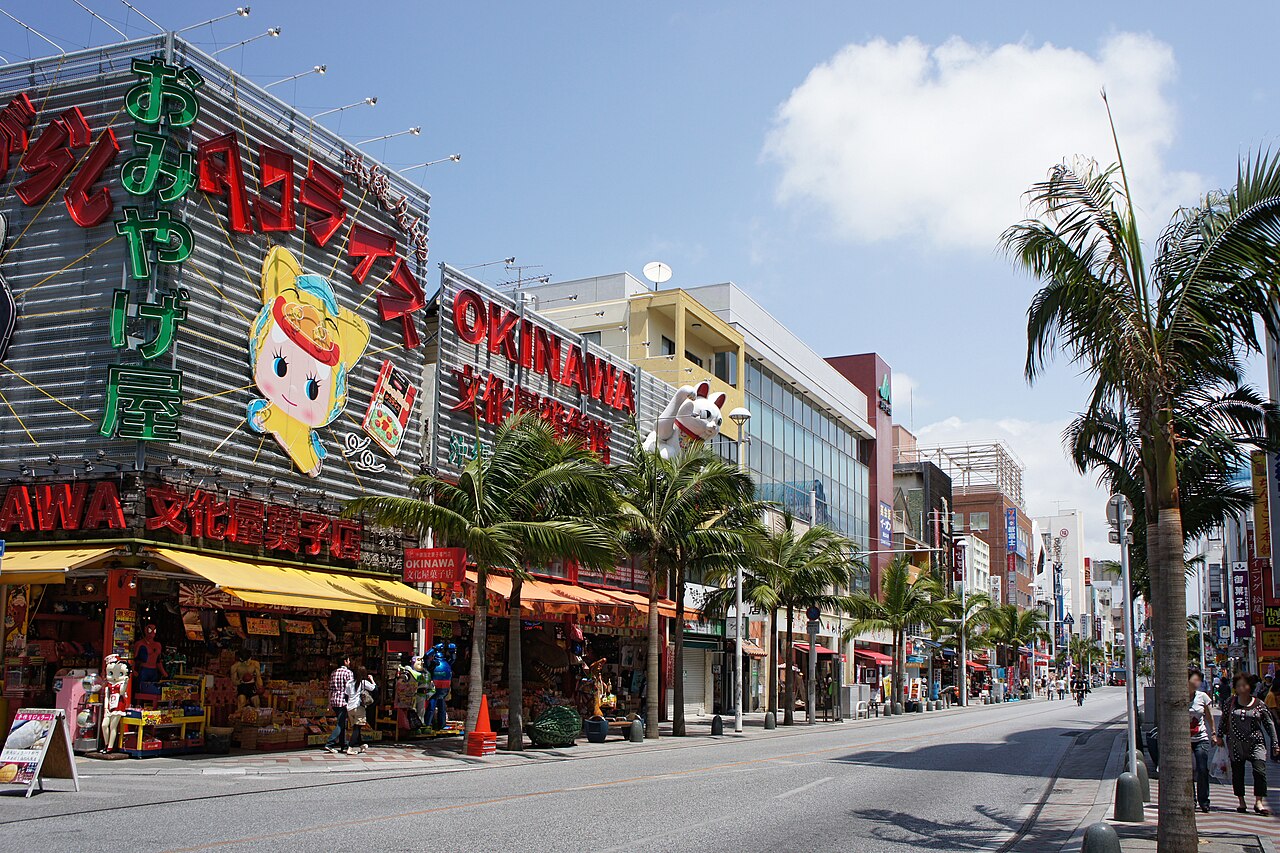
From Shuri, head down to Kokusai-dori, Naha's lively main street. Lined with souvenir shops, cafés, and performers, it's the easiest place to browse the full range of Okinawan gifts in one stroll. Just off the main drag, the pottery lane of Tsuboya Yachimun Street offers a quieter, older atmosphere, with kilns and workshops tucked between stone-paved lanes. Keep both in mind as you read on: many of the gifts below were born in places like these.
Chinsuko: The Royal Cookie of the Ryukyu Court
Chinsuko is Okinawa's most famous sweet — a small, crumbly shortbread-style cookie made from flour, sugar, and lard. Its name is said to mean something like "rare treasure," and for good reason: in the days of the Ryukyu Kingdom, chinsuko was a luxury served at the royal court and offered to honored guests, far beyond the reach of ordinary islanders.
Today everyone can enjoy it, and makers have expanded well beyond the classic plain version. You'll find chinsuko flavored with brown sugar, sea salt, chocolate, and even purple sweet potato. The texture is the charm — dry, delicate, and melting, somewhere between a biscuit and a piece of crumbly pastry. A box of individually wrapped chinsuko is light, keeps well, and is easy to share, which is why it remains the default "I went to Okinawa" gift across Japan.
Chinsuko cookies — see them on Amazon Japan
Beni-Imo Tarts: The Purple Sweet Potato Treat
If chinsuko is the classic, the beni-imo tart is the beloved modern icon. Beni-imo is Okinawa's vivid purple sweet potato, grown in the island's mineral-rich soil. Its natural color is so striking that the tart's filling looks almost jewel-like — a deep violet paste on a soft pastry base.
The tart became famous in the 1980s when local confectioners developed it as a new kind of Okinawan gift, and it has since become a staple of airport and souvenir shops. The flavor is gentle and earthy rather than very sweet, and the filling uses the potato's own color, with no need for anything artificial to achieve that purple. Look for tarts made with a high proportion of Okinawan-grown beni-imo, and note that the same potato appears in cakes, pies, and soft-serve ice cream all over the islands — the tart is simply the most giftable form.
Beni-imo tarts by Okashigoten — see them on Amazon Japan
Yachimun Pottery: Cups With Island Character
Yachimun is the Okinawan word for pottery, and it has been fired on these islands for centuries. Ryukyu potters absorbed techniques from China and Southeast Asia through the kingdom's trade networks, then made them their own. The result is earthy, generous ware: warm clay tones, bold patterns of fish, waves, and hibiscus, and glazes in deep greens and browns that echo the island landscape.
A yachimun cup or mug makes a wonderful gift because no two pieces are exactly alike, and using one back home brings a little island warmth to an ordinary morning. Traditional designs are painted freehand, so small variations are a sign of the real thing, not a flaw. If you visit Tsuboya in Naha, you can watch potters at work; if you're shopping from home, look for pieces described as handmade in Okinawa and check whether they are food-safe and how they should be cared for.
Yachimun pottery cups — see them on Amazon Japan
Bingata: Cloth Dyed in Ryukyu Colors
Bingata is Okinawa's traditional stencil-dyed textile, once reserved for the royal family and nobility of the Ryukyu Kingdom. Artisans carve intricate stencils, then apply pigments in brilliant reds, yellows, and blues, building up patterns of flowers, birds, waves, and pine trees. The colors are pure Okinawa — bright as the sun and sea that surround the islands.
Full bingata kimono are treasures, but the craft has happily found its way into everyday items. A bingata tote bag or a set of coasters carries the same patterns and pigments in a form you can actually use, and every time the colors catch your eye you'll remember where they came from. When shopping, you'll see both hand-dyed pieces and printed designs inspired by bingata. Hand-dyed work costs more, but the depth of color is unmistakable; printed versions are a friendly way to enjoy the patterns at a lower price.
Bingata-dyed tote bags — see them on Amazon Japan
Shikuwasa: The Little Lime With a Big Punch
Shikuwasa is a small green citrus fruit native to Okinawa — think of it as the island's answer to the lime, but tarter, more aromatic, and packed with a distinctive sharpness. Islanders squeeze it over grilled fish, mix it into drinks, and credit it as one of the secrets behind Okinawa's famous longevity.
For gifts, shikuwasa shows up as bottled juice, salad dressings, jams, candies, and even salt blends. The 100% juice is the connoisseur's choice: a few drops transform sparkling water, cocktails, or a simple grilled dish. Because fresh shikuwasa rarely travels well, these bottled and processed versions are exactly how Okinawans themselves keep the flavor on hand year-round. If you like bright, sour flavors, this is the souvenir most likely to disappear from your kitchen first.
Okinawan shikuwasa juice — see it on Amazon Japan
Bringing a Little Okinawa Home
Okinawa's gifts work so well because they are not generic. A cookie once served to kings, a purple potato turned into a modern classic, pottery shaped by centuries of trade winds, cloth dyed for royalty, and a tiny lime that islanders swear by — each one tells you something true about these islands and the kingdom that shaped them. Whether you browse Kokusai-dori in person or shop from your sofa, choosing Okinawan crafts and foods is a small way to keep that island feeling, and to support the makers who keep these traditions alive.
Photos: Featured photo by CEphoto, Uwe Aranas (CC BY-SA 3.0) via Wikimedia Commons; Photo by 663highland (CC BY 2.5) via Wikimedia Commons.


This article contains affiliate links. If you buy through them, we may earn a commission at no extra cost to you.
コメントを残す